

Image of a road

Road Building 101

Building a road takes more than asphalt, concrete and heavy equipment. Long before construction begins, state and local agencies identify transportation needs and engineers study options, costs, materials, safety and environmental impacts.

Once a project is ready to move forward, contractors bid on the work and begin turning the plans into the roads and bridges Hoosiers use every day.

How Indiana Builds Roads

Every project is different, but most roads and bridges follow the same basic path from an identified need to a finished project.

State and local agencies start by identifying a transportation need. It may be a road that needs repair, an intersection that needs improvement or a bridge that needs replacement.

They study traffic, safety, costs, environmental impacts and other factors to decide what work is needed and how best to address it.

Engineers turn the idea into a detailed plan. They survey the site, develop drawings, choose materials and address things like drainage, utilities, right of way and environmental requirements.

They also estimate how much the project should cost and develop the plans and specifications contractors will use to bid and build the project.

Once the plans are ready, the public agency advertises the project and contractors have an opportunity to bid on the work. Contractors review the plans, calculate the labor, materials and equipment they will need and submit a price.

The agency reviews the bids and awards the construction contract according to public bidding requirements. This process is usually called letting.

Winning the contract doesn’t mean paving starts the next morning.

Before major construction begins, contractors need to mobilize crews and equipment, develop traffic control and prepare the work site. Utilities may need to be moved or protected, and other work may need to happen before construction can move forward.

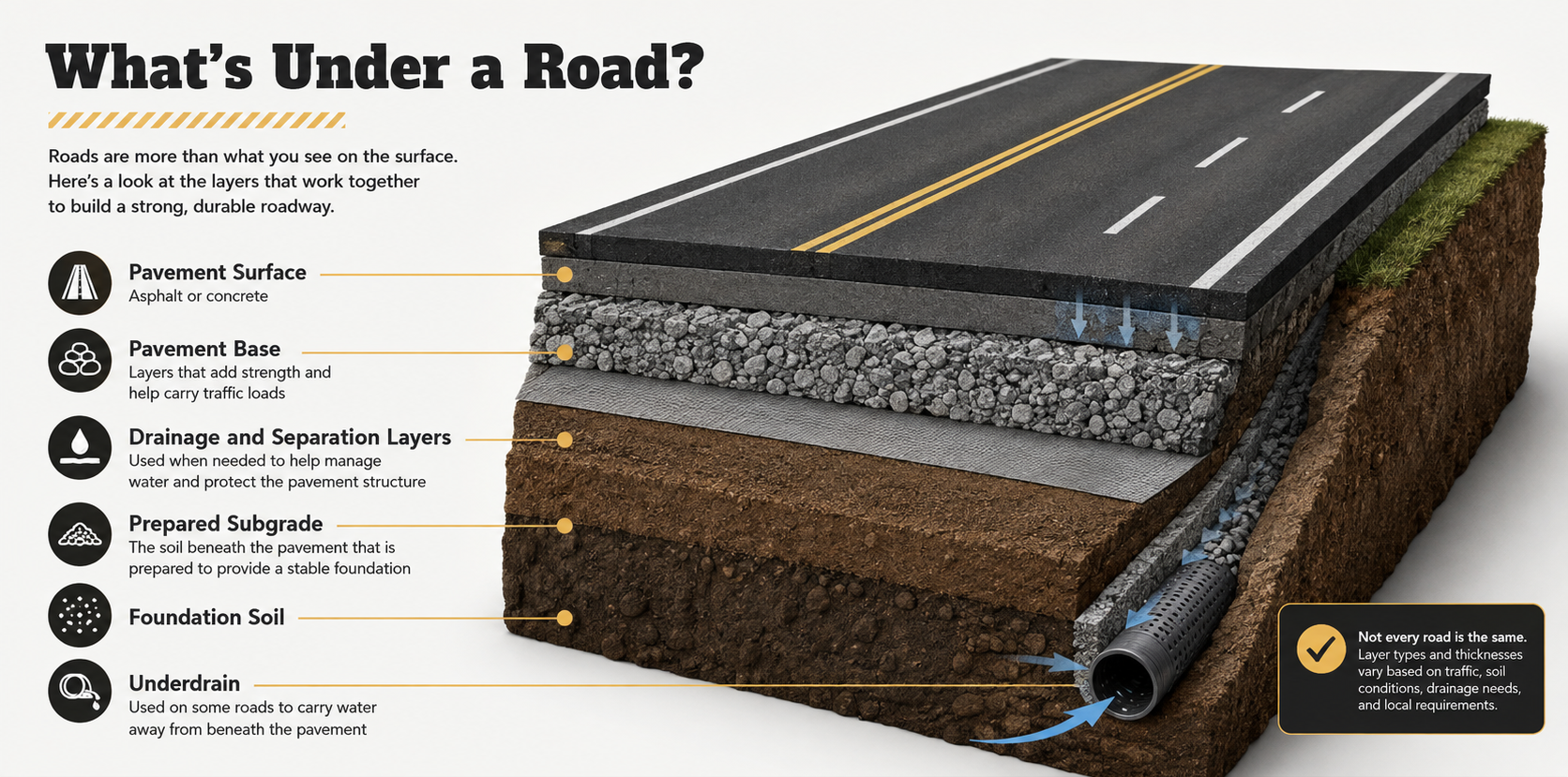
Construction usually starts from the ground up. Crews may clear the site, move earth, install drainage and prepare a stable foundation.

Next comes pavement, usually asphalt or concrete. Depending on the project, crews may also build bridges, curbs, sidewalks and other features. Signs, pavement markings and guardrail help finish the job.

Before the project is complete, the work is inspected to make sure it meets the plans and specifications. Then lanes can reopen or a new road can open to traffic.

But a finished road still needs attention. Regular maintenance and preservation help roads and bridges last longer and keep them safe for the people who use them.

Image
Illustration generated with artificial intelligence and reviewed by Indiana Constructors, Inc. Source: Indiana Department of Transportation.

Asphalt or Concrete?

Roads are generally paved with asphalt or concrete. The materials and pavement design used for each project depend on where the road is located and how it will be used.

ASPHALT

Image

Asphalt pavement is made by heating and mixing asphalt with aggregates such as stone and sand. Crews place the hot mixture in layers and compact it to create a smooth, durable driving surface.

CONCRETE

Image

Concrete is made by mixing cement, water and aggregates such as stone and sand. Crews place the mixture while it is wet, then allow it to harden and gain strength before opening the pavement to traffic.

Who Does What?

Building a public road is a team effort. Public agencies, engineers and contractors each play a different role in moving a project from an idea to a finished road.

Image

Public Agencies

INDOT, cities, counties and other public agencies identify transportation needs, manage funding and set the requirements for public road and bridge projects.

They oversee the project from planning through construction and make sure the finished work meets the contract requirements.

Image

Engineers

Engineers and other design professionals turn transportation needs into construction plans. They survey the site, develop drawings and specifications and address issues such as drainage, utilities, right of way and environmental requirements.

Those plans tell contractors what must be built and the standards the finished project must meet.

Image

Contractors

Contractors bid on the work and turn the plans into the finished project. They provide the workers, equipment and construction expertise needed to build the road or bridge.

Prime contractors may also coordinate specialized subcontractors, material suppliers and other companies needed to complete the work.

Road Building FAQs

Why does road work take so long?

keyboard_arrow_down

Road construction has to happen in a specific order, often while traffic continues to move through or around the jobsite. Weather, utilities, traffic, materials and unexpected conditions can all affect how and when the work gets done.

When nobody is working, why is the lane closed?

keyboard_arrow_down

A work zone may need to stay in place even when crews are not visible. Workers may be completing another part of the project, working at night when traffic is lighter or waiting for pavement or other materials to gain enough strength before the next step can begin.

Keeping traffic patterns consistent can also be safer than repeatedly moving lanes, barrels and other traffic-control devices.

Why are projects built in stages?

keyboard_arrow_down

On many projects, crews have to build the road while people are still using it.

That may mean shifting traffic to one side while crews work on the other, building temporary pavement or completing one portion of a bridge before moving traffic and starting the next. Each stage has to be completed before the project can move forward.

What does the weather have to do with it?

keyboard_arrow_down

Road building happens outdoors, and some construction work depends on the right weather conditions.

Rain can make soil too wet to work with, and temperature can affect paving and other materials. Severe weather can also make a jobsite unsafe. Crews may have to wait until conditions are right before certain work can continue.

How do utilities affect road construction?

keyboard_arrow_down

Gas, electric, water, sewer and communications lines may run above, below or alongside a road.

Before construction reaches them, utilities may need to be located, protected or moved. That work requires coordination among the public agency, utility companies, engineers and contractors and may have to be completed before another part of the project can begin.

Can't crews just pave over the old road?

keyboard_arrow_down

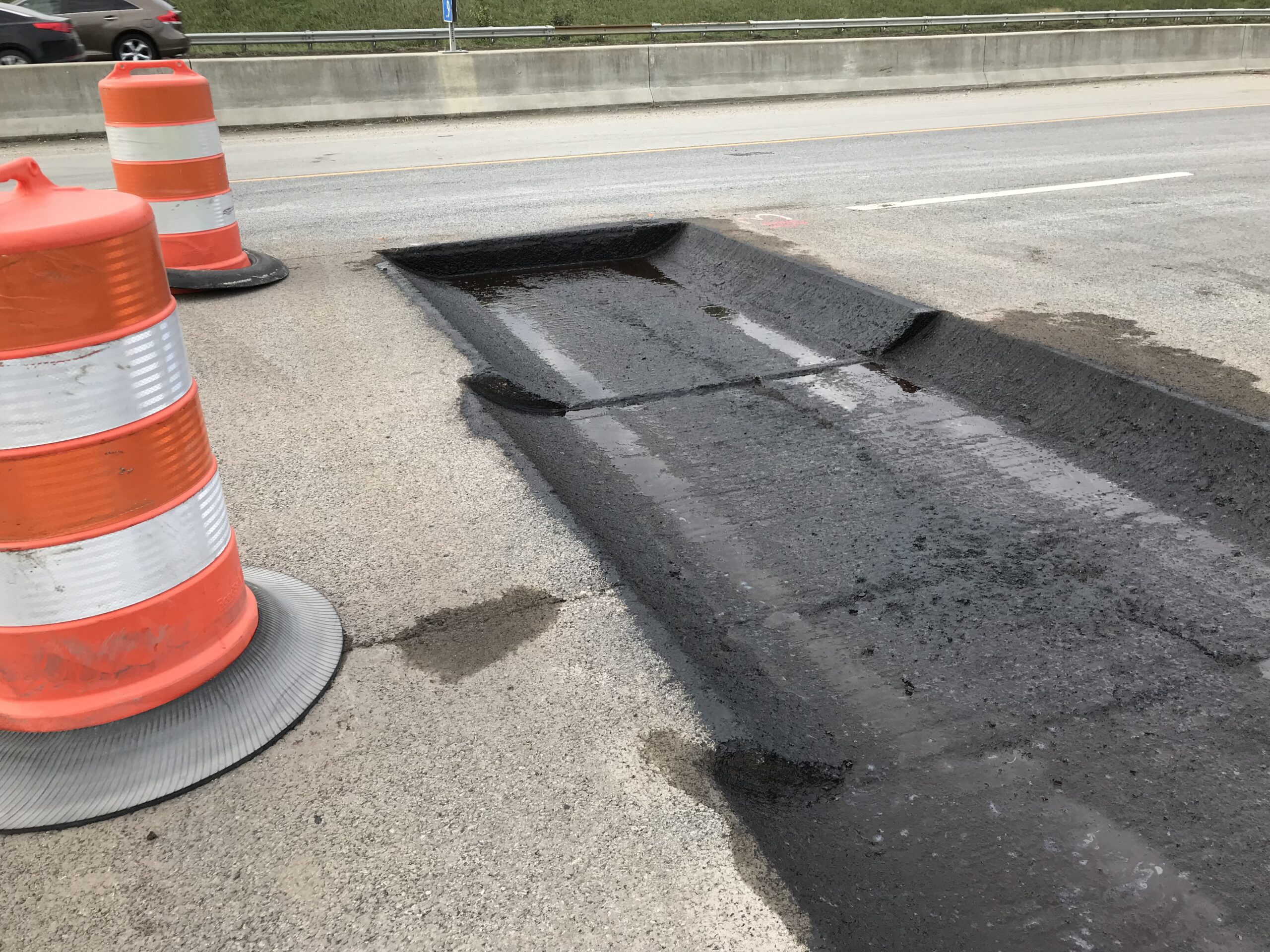
Sometimes they can. Resurfacing an existing road can extend its life when the pavement and foundation underneath are still in good condition.

But if the problems go deeper, covering them with a new layer of pavement will not fix them. Crews may need to remove damaged pavement, repair the foundation, improve drainage or rebuild part or all of the road.

Why close the road completely?

keyboard_arrow_down

Sometimes a full closure is safer and faster than building a project around traffic.

Closing the road can give crews more room to work, reduce conflicts between workers and vehicles and eliminate the time needed to repeatedly shift traffic through different stages of construction. In some cases, a shorter full closure can avoid months of lane restrictions.

Hero Image

Building Is Only the Beginning

Opening a road to traffic is not the end of the job. Roads and bridges need regular inspection, maintenance and repairs throughout their service lives.

Small fixes and preservation work can help extend the life of a road. As pavement wears, larger repairs may be needed, from resurfacing and rehabilitation to eventually rebuilding all or part of the road.

Taking care of roads at the right time helps them last longer and can delay the need for more extensive and expensive work.

Hoosier Roads by the Numbers

97,401

Miles of Indiana's Public Roads

19542

Number of Indiana Bridges

89%

Locally Owned Road Miles

Sources: Federal Highway Administration, 2024 Highway Statistics and 2025 National Bridge Inventory.

How Do We Pay For It?

Building and maintaining Indiana’s roads and bridges takes ongoing investment. Federal, state and local funding all help pay for different parts of the transportation system.

Want to understand where that money comes from and how Indiana funds its transportation network? Build Indiana Council has resources to help explain it.

Explore Road Funding

View the Latest Facebook News